

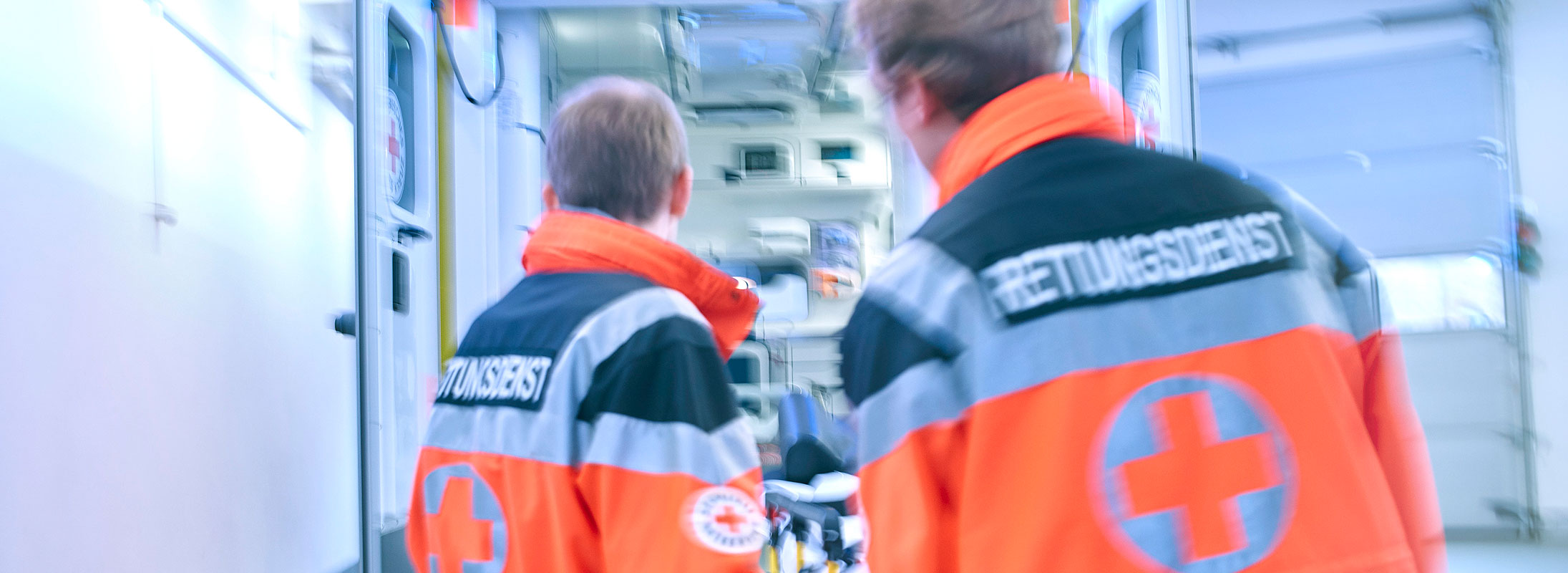
A Chest Pain Unit (CPU) is dedicated to patients who complain of unclear chest pain or a feeling of pressure in the chest. This can indicate a heart attack or a problem with the coronary arteries. A heart attack is an acute emergency and can be life-threatening. In this case, the emergency services must be called immediately by dialling 112. In the event of a heart attack, our team of five experienced cardiologists is available to the patient around the clock, 24 hours a day, 365 days a year.
In this case, the ambulance service will contact the emergency room team from the ambulance. This is done using the emergency information and documentation assistant (NIDA pad). With this new telemedicine technology, the ambulance service can transmit an ECG directly to the hospital. This means that, if necessary, the cardiac catheterisation laboratory team can be on standby for any examinations.
What happens after admission to our Chest Pain Unit?
If acute heart pain is suspected, a decision is made as to whether immediate or prompt cardiac catheterisation is necessary. If this is not necessary, a decision is made as to whether the patient should be admitted to hospital for further examinations or whether clarification can be provided on an outpatient basis by a general practitioner or specialist. At the same time, other possible conditions such as pulmonary embolism or enlargement of the aorta (aortic dissection) are investigated.


Dr. med. Andreas Brugger (englischer Eintrag)
Specialist in internal medicine/cardiology
Additional qualifications:
Interventional cardiology (DGK)
Specialised rhythmology (DGK)
Intensive care
Emergency/rescue medicine
Contact
Albert-Schweitzer-Straße 10
95326 Kulmbach
Cornelia Krauß
Phone 09221 98-1851
Fax 09221 98-1802
E-mail cornelia.krauss@klinikum-kulmbach.de
Office hours and appointments
Please call us to arrange an appointment.